Don't miss our holiday offer - up to 50% OFF!
Marks vs Real Learning: How to Protect Young Children From Exam Pressure
Exam pressure is starting younger in India. How to spot stress in young children, why marks aren't the same as learning, and what parents can do to keep learning joyful.

Unit tests in Class 1. Ranks in Class 2. Coaching classes in Class 4. In many Indian cities, exam pressure now starts long before board exams — sometimes before a child can comfortably read. This post is about what that pressure does to young children, why marks and real learning are not the same thing, and how parents can protect their child’s love of learning without ignoring school.
Why the pressure starts so early
It’s easy to blame schools, but the pressure comes from many places: competition for limited seats, worries about the future, comparison with relatives and neighbours, and our own childhood experiences. Parents push because they care. The trouble is that young children feel that pressure deeply — and often can’t explain it.
Marks are not the same as learning
A test score shows how a child performed on one paper, on one day, on a narrow set of questions. It doesn’t show:
- whether they understand the concept or memorised the answer;
- how curious, creative or persistent they are;
- how well they communicate, cooperate or solve new problems;
- how much they enjoy learning.
A child can score 95% by cramming and forget it all in a month. Another can score 70% and understand the topic deeply. In the long run, understanding and enjoyment matter far more. (More in why a love of learning matters most.)
Signs your child may be stressed
Young children rarely say “I’m anxious about exams”. Watch for:
- stomach aches or headaches, especially on school mornings;
- trouble sleeping, nightmares or bedwetting after being dry;
- irritability, tantrums or crying over small things;
- saying “I’m stupid” or “I’m bad at maths”;
- avoiding homework, reading or anything that feels like a test;
- losing interest in play they used to love.
If these signs are frequent or severe, speak to your paediatrician or a qualified child counsellor.
What parents can do
Watch what you say after a test
Children read our reactions closely. Instead of “How many marks did you get?” try “What did you find easy? What was tricky?” Celebrate effort and improvement, not just the number.
Stop the comparisons
“Look at your cousin” never motivates; it only shames. Compare your child only with their own past progress.
Keep play in the daily schedule
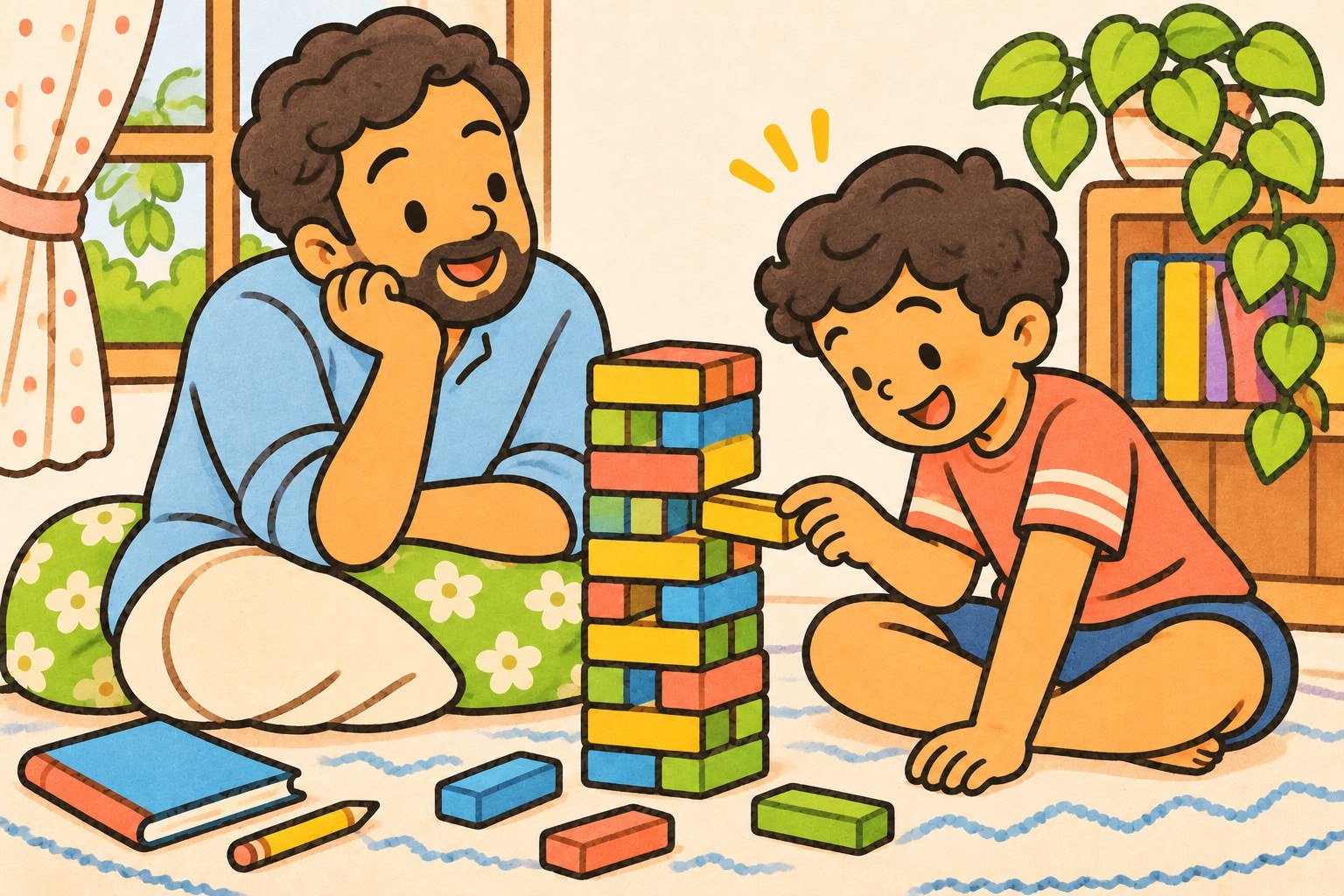
Play isn’t a reward for finishing studies — it’s essential for young children’s development and emotional health. Protect time every day for free play, outdoor time and fun. Calming, absorbing activities like a stacking tower game (6–9 years) or building with magnetic sticks (3+) help children relax while still thinking hard.
Teach for understanding, not memorising
When helping with homework, ask your child to explain things in their own words, use objects for maths, and connect lessons to daily life. Understanding reduces anxiety because the child isn’t relying on fragile memory.
Break revision into small, playful chunks
Fifteen minutes of focused, game-like revision beats two hours of tearful cramming. Quiz games, flashcards, “teach me” role-play and drawing diagrams all work well.
Protect sleep
Children aged 6–12 generally need around 9–12 hours of sleep. Late-night studying before a test hurts memory more than it helps.
Limit extra classes
Coaching and tuition for very young children often add pressure without adding much learning. If you use them, check that your child still has time to play and rest.
Talk to the teacher
If tests are causing distress, have a calm conversation. Many teachers are sympathetic and can suggest ways to support your child.
Model a healthy attitude to mistakes
Share your own mistakes and what you learned from them. Let your child see that getting things wrong is part of learning for everyone.
What success really looks like at this age
For children under 10, a good year isn’t measured by rank. It’s a child who:
- enjoys reading and asks questions;
- can explain what they’ve learned in their own words;
- keeps trying when things are hard;
- gets along with others;
- has time to play, rest and be a child.
When to consider a change
If school pressure is seriously affecting your child’s health or happiness despite your efforts, it may be worth looking at alternatives — a school with a different approach, a different board, or even homeschooling. Our guides to the benefits of homeschooling and afterschooling may help you think it through.
The bottom line
Marks matter, but they are not the goal of early education — learning is. Protect your young child from excessive exam pressure by focusing on understanding, praising effort, keeping play in every day and staying calm yourself. A child who loves learning will keep growing long after any test is forgotten.