Don't miss our holiday offer - up to 50% OFF!
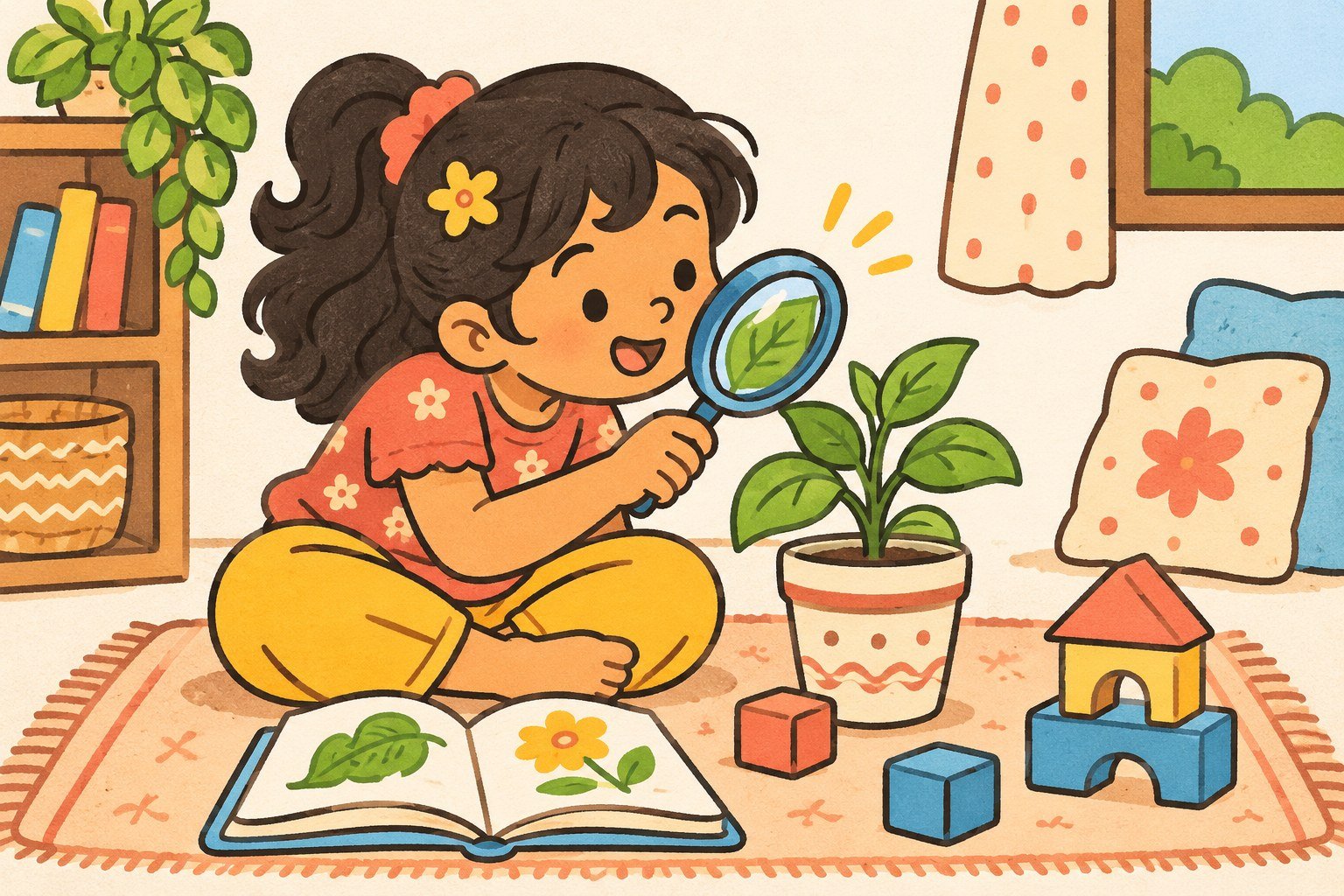
Why a Love of Learning Is the Most Important Thing You Can Give Your Child
Education is the most important thing a child gets — but the real prize is a love of learning, not marks. What that means and how parents can build it at home.

Ask any Indian parent what they want most for their child and education will be near the top of the list. We save for it, we move house for it, we queue overnight for admission forms. That instinct is right. Education is the single most powerful thing a child can be given — it shapes their work, their health, their choices and the kind of adult they become.
But somewhere along the way, “education” has quietly shrunk into something much smaller: marks, ranks, and the next entrance exam. This post is about the bigger thing. Not the report card, but the habit that sits underneath every good report card and every good life — a genuine love of learning.
Education is more than school
School is one place education happens. It is not the only place, and for young children it is often not the main one. A three-year-old learns more about volume pouring water between steel tumblers than from any worksheet. A six-year-old learns more about money helping you count change at the kirana store than from a chapter on “Our Market”.
Real education is everything that helps a child understand the world and act in it well:
- Curiosity — the urge to ask “why?” and “what happens if…?”
- Thinking skills — noticing patterns, solving problems, testing ideas.
- Language — being able to explain, argue, listen and read with pleasure.
- Persistence — trying again when a tower falls or a sum doesn’t work.
- Social and emotional skills — sharing, waiting, managing frustration, working with others.
- Values — honesty, kindness, responsibility.
Marks measure a small slice of this. A child can score well and lose their curiosity entirely. A child can score modestly and still be a fierce, joyful learner who keeps growing for life.
Why the love of learning matters more than any single subject
The world our children will work in is changing faster than any syllabus can keep up with. Many of the jobs they’ll do don’t exist yet. The facts they memorise for Class 5 science will be a search away. What can’t be searched is the willingness to keep learning — to pick up a new skill at 25, 40 or 60 without fear.
Children who enjoy learning:
- learn faster, because attention comes naturally when you’re interested;
- remember more, because things you understand stick better than things you cram;
- cope better with failure, because mistakes feel like part of the game rather than a verdict on them;
- keep learning after the exams stop, which is where most of life happens.
India’s own education policy has started to say the same thing. The National Education Policy 2020 describes the years from 3 to 8 as a “foundational stage” and calls for that stage to be play-based and activity-based, focused on curiosity and understanding rather than rote memorisation. The direction is clear — the challenge is making it real in everyday life.
The early years build the foundation
The first eight years are when a child’s brain is building connections faster than at any other time. What children do repeatedly in these years — talk, explore, build, pretend, play with others — lays down the wiring for everything that follows. (We go deeper on this in how interactive toys support brain development.)
That is why the early years are not “too early” for education. They are the most important years for it. But the right kind of education at three looks nothing like school at thirteen. It looks like play.
What parents can do at home
You don’t need a degree in education or an expensive programme. You need a few habits that tell your child, again and again, that learning is interesting and safe.
1. Answer questions — or better, wonder together
When your child asks “why is the sky blue?”, it’s fine to say “I don’t know — let’s find out.” That one sentence teaches more than the answer: it shows that adults learn too, and that not knowing is the start of something, not a failure.
2. Praise effort, not intelligence
“You kept trying until the puzzle fitted” builds a learner. “You’re so smart” can quietly build a child who avoids anything hard in case they stop looking smart.
3. Make room for unstructured play
Children need time with open-ended materials — blocks, puzzles, art supplies, things they can build and rebuild. A set like My Blocks 87-piece building set (age 4–6 on the box) or a magnetic sticks STEM set (3+) can be a tower today and a bridge tomorrow. Open-ended toys teach planning, balance, cause and effect, and the joy of making something yourself.
4. Read together every day
Ten minutes of reading aloud is one of the highest-value things a parent can do. Read in whatever languages your family speaks. Let your child choose books, re-read favourites, and interrupt with questions.
5. Bring learning into daily life
Cooking is fractions and chemistry. A train journey is geography and time. Sorting laundry is classification. Counting stairs is maths. The more learning lives in ordinary life, the less it feels like a separate, dreaded thing.
6. Protect them from too much screen time
Screens are not evil, but they are passive by default. For young children, hands-on play, conversation and outdoor time do far more for development. If you want a sensible baseline, we summarised what the screen-time guidelines actually say.
When marks matter — and when they don’t
None of this means exams are unimportant. In India, marks open doors, and it would be dishonest to pretend otherwise. But a child who loves learning usually does fine in exams too, because they understand the material instead of memorising it the night before.
The danger is in reversing the order: chasing marks so hard in the early years that the child learns to hate learning itself. That’s a bad trade. Marks at age seven are forgotten by everyone within a year. A child’s attitude to learning lasts a lifetime.
The bottom line
Education truly is the most important thing you can give your child. Just remember what it really is: not a rank, but a curious, capable, confident mind that keeps growing. Protect the curiosity, feed it with good books, real conversations and hands-on play — and the marks usually follow.
If you’re looking for toys that support this kind of learning, browse our STEM toys and puzzles & brain games. Every order sends 2% to children’s charities, so your child’s learning helps another child’s too.