Don't miss our holiday offer - up to 50% OFF!
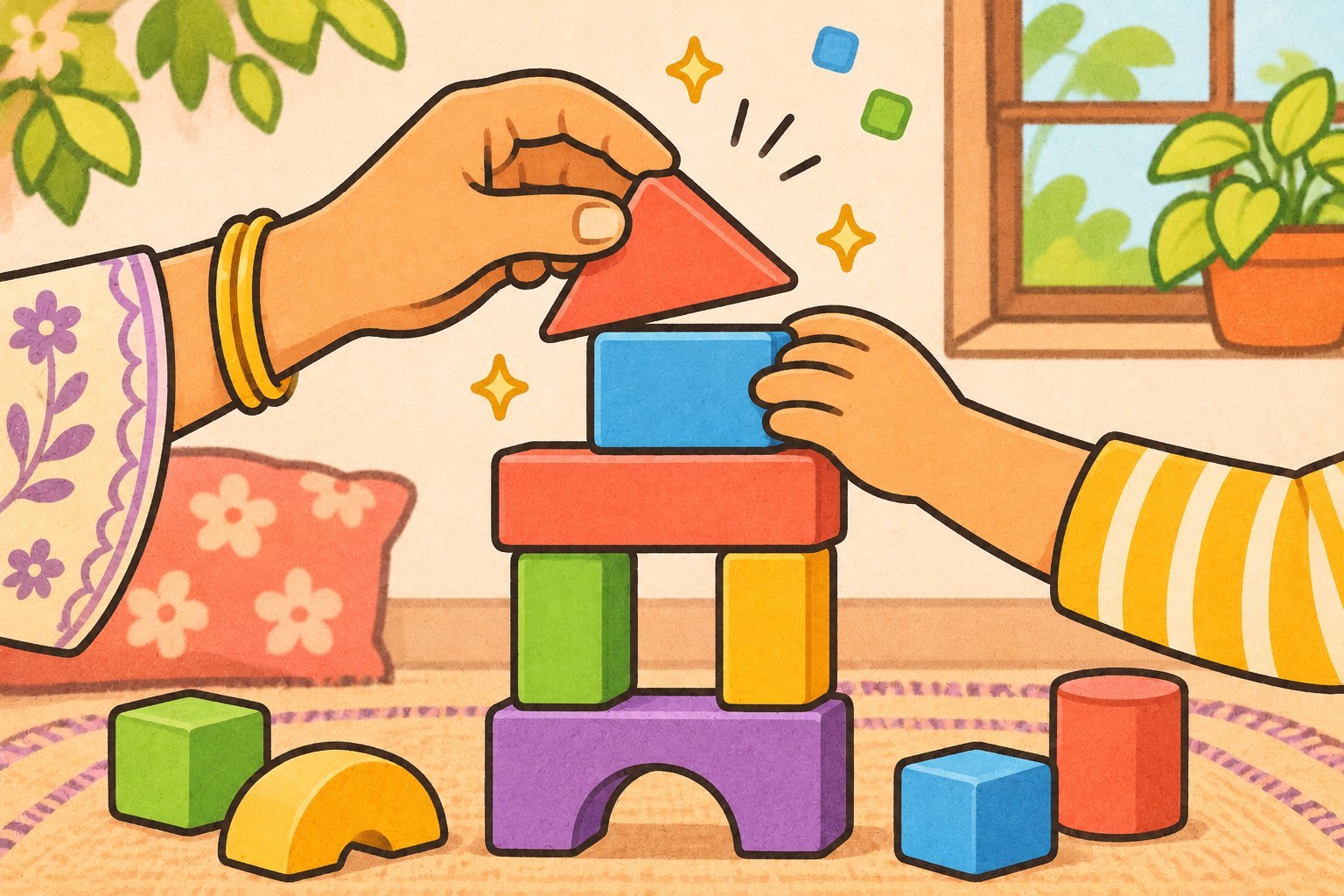
How Interactive Toys Support Your Child’s Brain Development
What interactive really means, what happens in the brain during play, and how to choose toys that build thinking skills at every age.

Parents hear it all the time: the first few years are when a child’s brain grows fastest. It is true, and it is also why so many toys now carry the words “brain development” on the box. The label alone tells you very little. What matters is what the child actually does while playing.
This guide explains, in plain language, how interactive toys support a child’s thinking, what “interactive” should really mean, and how to choose toys that do more than flash and beep.
The short answer
A toy supports brain development when it makes the child act, think and respond: pressing, stacking, matching, building, guessing, pretending. A toy that only entertains while the child watches teaches very little. Look for toys where the child makes something happen, and play with them together whenever you can.
What “interactive” really means
Many toys are sold as interactive because they light up or play music when a button is pressed. That is a reaction, but it is a very small one. A truly interactive toy responds to what the child does and gives them something new to figure out. A shape sorter is interactive because the child has to try, fail and try again. A set of magnetic sticks is interactive because every build is different.
A useful test is to ask: who is doing the thinking, the toy or the child? The more the child has to think, the more the toy is helping.
What happens in the brain during play
Young children learn by repeating actions and noticing what happens. Each time a child pushes a block off the table or fits a piece into a puzzle, they are testing an idea about how the world works. Researchers who study early childhood describe the back-and-forth between a child and a caring adult as “serve and return”: the child babbles, points or reaches, the adult responds, and that exchange helps build the brain’s connections. A toy can provide the thing to talk about, but the exchange itself is what counts most.
Skills different kinds of toys build
- Cause and effect (rattles, squeeze toys, pop-up toys): “When I do this, that happens.” This is the base of all later reasoning. See our guide to baby sensory toys.
- Fine motor skills (stacking, threading, puzzles, writing boards): small muscles in the hand and fingers, which are needed for writing later.
- Problem solving (puzzles, building toys, magnetic sticks): trying something, seeing it fall and trying a different way.
- Early maths and language (number boards, alphabet boards, sound books): matching, counting and sounds. Our numbers puzzle board and alphabet puzzle board are made for this.
- Imagination and social skills (dolls, doctor sets, pretend kitchens): taking turns, understanding other people’s feelings, telling a story.
- Movement and balance (ride-ons, bop bags, balls): body awareness and coordination, which also help focus.
Where electronic and musical toys fit
Light-up and musical toys aren’t bad. Many children enjoy them, and a good one can teach cause and effect. The risk is when they do everything for the child. A rule that works well at home: choose the toy that needs the child more. If your child plays with it for ten minutes and walks away because it ran out of things to do, it was too passive. If they come back to it a week later and use it differently, it was a good one.
For the youngest children, major paediatric bodies recommend keeping screen time very low. Real objects they can hold, mouth and move teach more than anything on a screen at that age.
How to pick by age
- 0 to 1 year: rattles, soft toys, textured toys, teethers.
- 1 to 3 years: stacking, shape sorters, chunky puzzles, blocks, push-and-pull toys.
- 3 to 5 years: building sets, magnetic sticks, matching games, pretend play.
- 6 to 9 years: strategy games, STEM kits, bigger constructions, puzzles with a goal.
For more detail across these ages, read our guide to educational toys for kids in India, by age.
What you can do in ten minutes
- Sit at your child’s level and let them lead. Don’t fix their puzzle for them.
- Say what you see: “You put the red one on top.” Naming things builds language.
- Ask one open question: “What do you think will happen if we add one more?”
- Let them be wrong. Trying again is the lesson.
- Put the toy away when they lose interest. Fewer toys out at a time means deeper play.
A note of honesty
No single toy makes a child smarter. A calm home, conversation, stories, sleep, food and time to play do more than any product. A good toy is a tool that makes those things easier. If you want a place to start, our educational and learning toys and building toys are chosen with that in mind.