Don't miss our holiday offer - up to 50% OFF!
Why Building & STEM Toys Matter: The Real Benefits Behind the Play

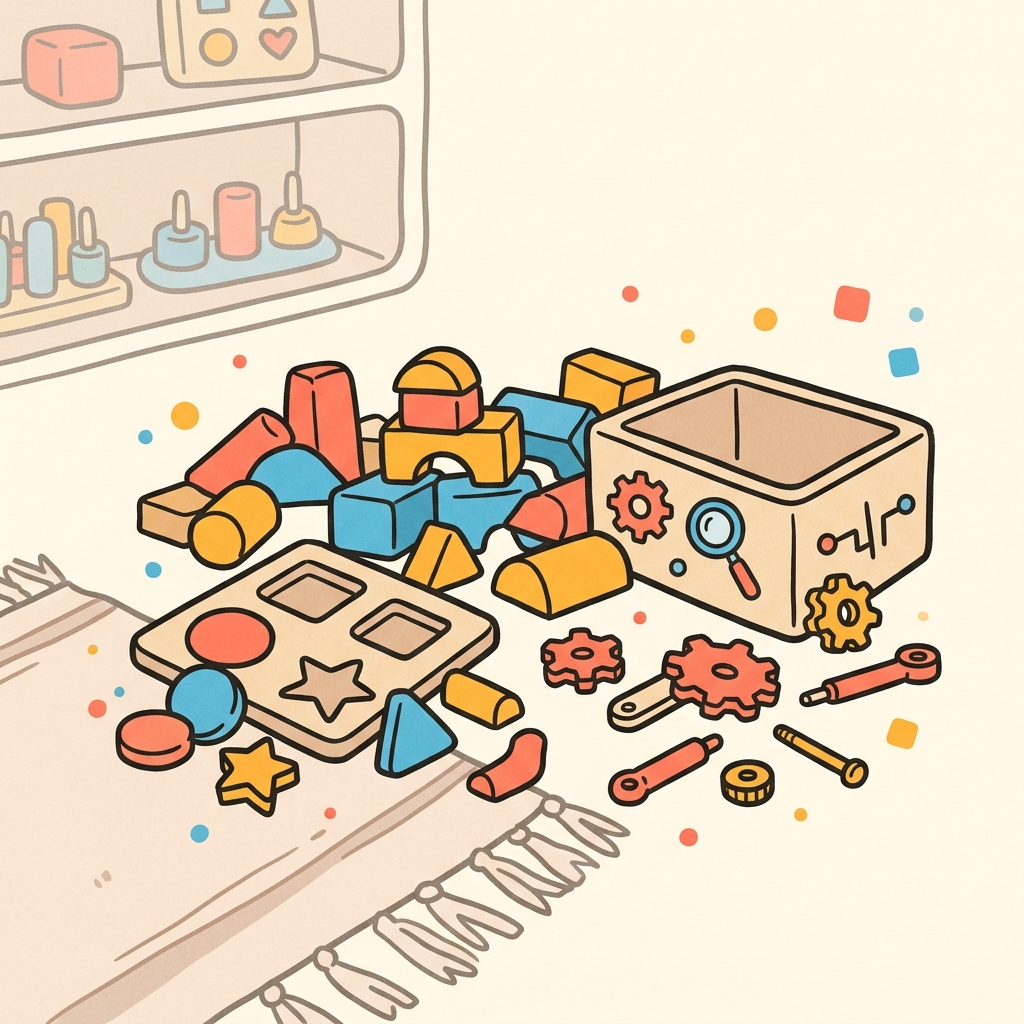
To a child, a box of building blocks is just fun. To a developing brain, it’s a small workout — testing balance, cause and effect, planning, and patience, all at once, without a single instruction being given.
That’s the quiet appeal of building and STEM toys: they don’t need to announce that they’re educational. The learning happens as a side effect of genuinely enjoying the play. Here’s what’s actually going on behind four common categories.
Building Blocks: Planning and Problem-Solving
When a child stacks blocks and watches them fall, they’re not failing — they’re running an experiment. Every rebuild is a small adjustment: wider base, fewer blocks up top, slower hands. This trial-and-error loop is the same thinking pattern used later in problem-solving of any kind, just at toddler scale.
Building sets also introduce an early, physical understanding of cause and effect — push here, that falls; place it there, it holds — well before a child has the words to explain why.
Puzzles: Logic and Patience
A shape or jigsaw puzzle asks a child to hold an image in their head, compare it to what’s in front of them, and adjust — repeatedly, without giving up after the first wrong attempt. That repeated “try, fail, adjust” cycle is where patience is actually built. It’s rarely taught directly; it’s practiced, piece by piece.
STEM Kits: Curiosity Made Physical
A STEM kit — whether it’s a simple science experiment box or a discovery kit — takes an abstract “why does that happen?” and makes it something a child can physically test. Instead of being told an answer, the child runs the experiment and sees the result themselves. That shift, from being told to finding out, is what makes STEM play stick longer in a child’s memory than a fact read off a page.
Strategy Games: Planning Several Moves Ahead
Board games that involve real strategy — not just rolling a dice and moving forward — ask a child to think a few moves ahead and consider what happens after their turn, not just during it. That’s a meaningfully harder skill than it sounds, and it’s one of the clearest markers of a child moving from purely reactive play into planning-based thinking.
Where to start
Magnetic Sticks Puzzle — 36-Piece STEM Building Set at ₹659 is the usual first step — open-ended, no instructions, works from about four upwards. Wooden Tumbling Tower — 54-Piece Numbered Blocks Game at ₹699 covers the balance-and-physics end for older children.
Browse building toys and STEM toys, or read what to gift a 4 year old who has everything for more on open-ended play.