Don't miss our holiday offer - up to 50% OFF!
Best Educational Toys for Kids in India: A Complete Age-Wise Guide (0–9 Years)

Walk into any toy aisle and you’ll see hundreds of boxes promising to make your child “smarter,” “sharper,” or “future-ready.” Most of that is marketing. But some categories of toys really do line up with how a child’s brain develops at each stage — and knowing the difference can save you money and give your child something that actually earns its shelf space.
Here’s a simple, age-wise way to think about it.
0–2 Years: Toys for the Senses
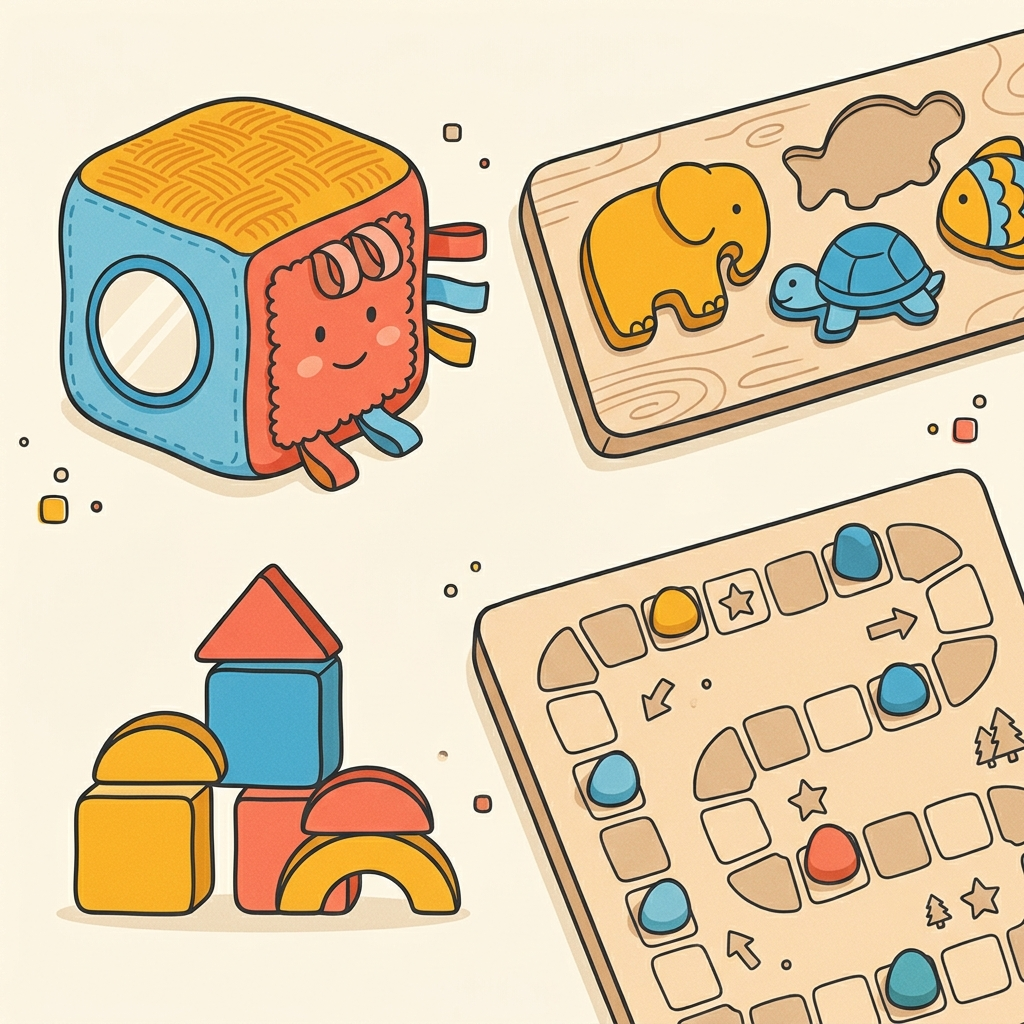
At this age, a toy’s job isn’t to teach shapes or colours yet — it’s to give a baby’s senses something safe and interesting to explore. Look for soft textures, gentle sounds, and things that are easy for small hands to grip. Sensory play sets, soft blocks, and simple rattles do more for a toddler’s development than anything with a screen or a battery.
What to avoid: small detachable parts, anything with sharp edges, and toys that do all the “playing” for the child (lights and sounds on a loop, with nothing left for the baby to actually do).
2–4 Years: Toys for Logic and Patience
This is the age of “why?” — and it’s also when simple puzzles, shape sorters, and first building sets start to matter. A wooden shape puzzle isn’t just cute; it’s teaching a toddler to compare, test, and try again, which is the same muscle they’ll later use for reading and math.
Trains, stacking sets, and toys with an obvious cause-and-effect (push this, that happens) are also strong picks here — they reward a child’s curiosity immediately, which keeps them engaged longer than something too abstract.
4–6 Years: Toys for Creativity and Focus
Somewhere around age four, children start building stories, not just structures. This is where block sets, city builders, and art supplies come in — they don’t have one “correct” outcome, so the child decides what they’re making. That open-endedness is exactly what builds creativity and sustained focus, two things a fixed-outcome toy (or a screen) can’t offer.
What to look for: sets that can be rebuilt into something new each time, rather than a single model that’s “finished” once assembled.
6–9 Years: Toys for Curiosity and Planning
By six or seven, children can handle real complexity — multi-step instructions, basic strategy, and cause-and-effect that plays out over several moves rather than one. STEM kits, dino/discovery sets, and strategy board games fit well here. A simple board game that requires planning two or three moves ahead is doing more for a child’s thinking than most apps marketed as “educational.”
9+ Years: Toys for Deeper Thinking
Older children benefit from toys that respect their growing attention span and reasoning ability — advanced STEM kits, more complex strategy games, and building sets with real engineering constraints (weight, balance, structure). At this age, a toy that’s “too easy” gets abandoned fast, so it’s worth choosing slightly ahead of where you think your child is, rather than behind.
A Quick Safety Note
Whatever the age, one thing should never be optional in India: BIS certification (the ISI mark) on the toy. It’s a legal requirement for any toy sold to children under 14, and it exists specifically to catch the things a parent can’t check by eye — like heavy metals in paint or plastic that isn’t actually safe for little hands and mouths. We’ve written a full explainer on what that certification actually covers, if you want the details.
Shop the ages in this guide
Toys for 1-3 year olds · 2-4 year olds · 3-6 year olds · 4-6 year olds · 6-9 year olds
For the learning end specifically, see educational & learning toys and puzzles & brain games.