Don't miss our holiday offer - up to 50% OFF!
Homeschool Curriculum Options in India: NIOS, IGCSE, NCERT, Montessori and More
Compare homeschool curriculum options in India — NCERT books, NIOS, Cambridge IGCSE, Montessori, Charlotte Mason and unschooling — and how to choose by your child's age.

One of the first questions new homeschooling parents ask is: “What curriculum should we use?” In India, there’s no single homeschool syllabus — which is both freeing and confusing. This guide explains the main options, what they’re good for, and how to choose based on your child’s age and your family’s goals.
Programme details and fees change. Always confirm current rules on the official websites before you commit.
First, separate “curriculum” from “certification”
These are two different things:
- Curriculum is what and how your child learns day to day — books, activities, projects.
- Certification is the recognised exam or board that gives your child a certificate for further education.
Young children need curriculum, not certification. You can use a gentle, play-based approach for years and choose a certification route later.
Curriculum options
1. NCERT textbooks
NCERT books are affordable, widely available, and aligned with what Indian schools teach. Many homeschoolers use them as a spine — especially for maths, EVS and languages — and add hands-on activities around them. Good if you want to keep the option of returning to school open.
2. Montessori-inspired learning
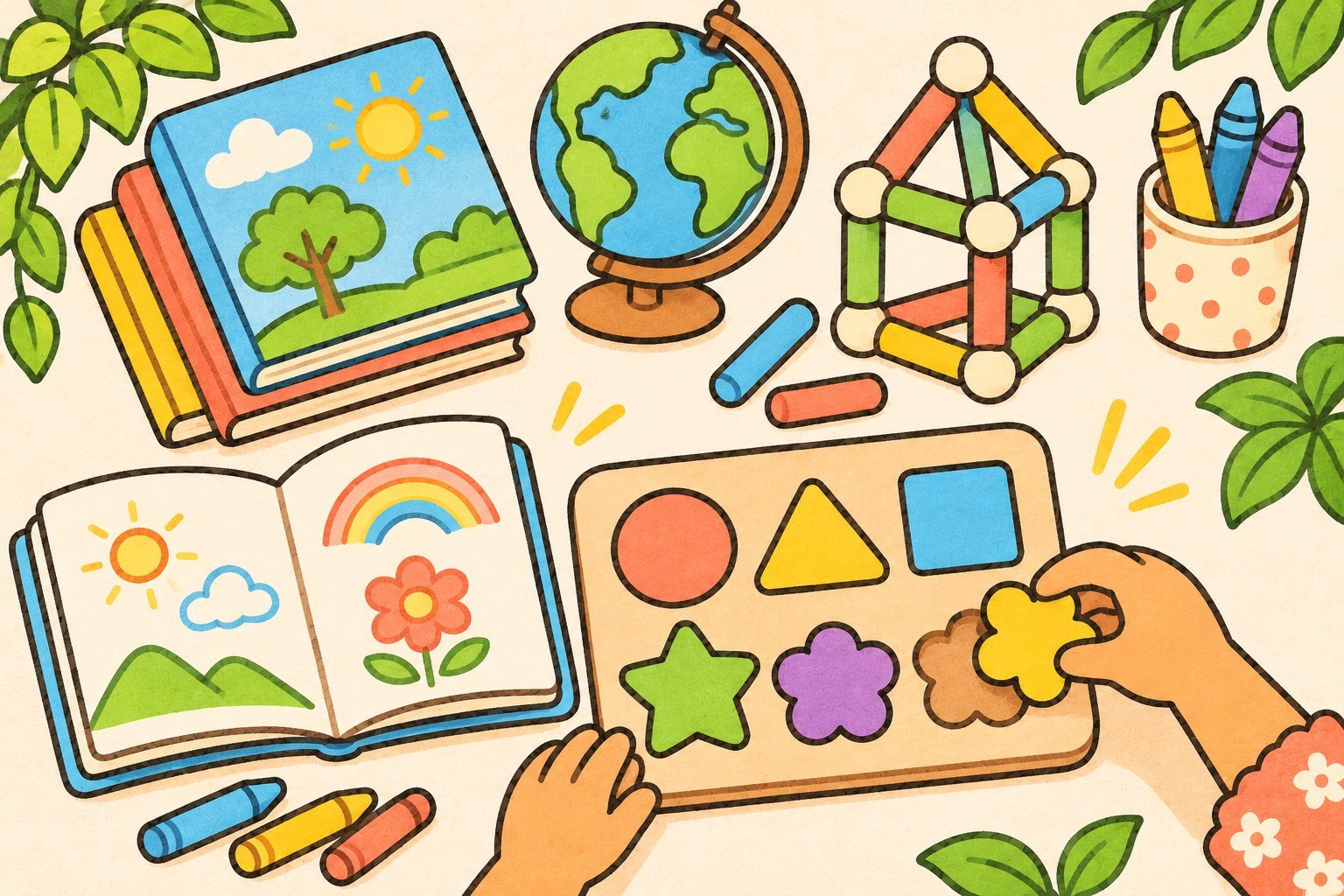
Child-led, hands-on and highly practical, Montessori works especially well for ages 0–6. Children use concrete materials to understand abstract ideas: counting with objects before writing numbers, tracing letters before writing words. You don’t need official Montessori equipment — simple wooden puzzles, sorting trays and real household tasks go a long way. A wooden shapes & colours board (1–3 years on the box) is a classic starter.
3. Charlotte Mason
Built on “living books” (well-written books rather than dry textbooks), nature study, art and music appreciation, narration (the child retells what they learned) and short, focused lessons. It suits families who love reading and outdoor time.
4. Unschooling
Learning follows the child’s interests and everyday life, with very little formal instruction. It can produce deeply motivated learners, but it needs attentive parents who enrich the environment and notice learning opportunities. Many families use unschooling principles for young children and add structure later.
5. Online and packaged curricula
There are Indian and international online programmes offering structured lessons, worksheets and sometimes live classes. They save planning time but can be expensive and screen-heavy, which is worth weighing for young children.
6. Eclectic (mix and match)
Most homeschooling families end up here: NCERT for maths, living books for reading, Montessori materials for early years, projects for science. Use what works for each child and each subject.
Certification options
NIOS — National Institute of Open Schooling
NIOS is a national board set up by the Government of India, alongside boards like CBSE. It’s the most common certification route for Indian homeschoolers because it’s affordable and flexible.
- Open Basic Education (OBE): levels A, B and C, equivalent to Classes 3, 5 and 8, delivered through accredited agencies. Check NIOS for current eligibility by age.
- Secondary (Class 10) and Senior Secondary (Class 12): recognised for higher education and jobs. Learners choose their subjects and can take exams in sessions through the year.
Cambridge IGCSE and A Levels (private candidate)
Children can sit Cambridge exams as private candidates at approved centres in many Indian cities. It’s internationally recognised and flexible in subject choice, but costs are much higher than NIOS, and you’ll need to arrange coursework and practical requirements carefully.
Returning to school
Some families homeschool for the early years and then enrol in a regular school. Under the RTE framework, children are generally admitted to a class appropriate to their age, though schools may assess them. Keeping a learning log and following NCERT outcomes loosely makes this transition easier.
How to choose by age
Ages 0–3
No curriculum needed. Talk, sing, read, play. Focus on sensory exploration, movement and language. See our guide to baby sensory toys.
Ages 3–6
Play-based and Montessori-style learning works best. Build early literacy (sounds, letters, stories) and numeracy (counting, shapes, patterns) through hands-on materials like our 0–9 numbers board (2–4 years) and the interactive phonetic sound book (4+).
Ages 6–9
Add a light structure: daily reading, a maths spine (NCERT or similar), project-based science and EVS, and lots of real-world learning. Building and STEM toys such as magnetic sticks (3+) support geometry and engineering thinking.
Ages 9+
Start looking at your certification route and gradually align learning with it.
Questions to ask before choosing
- Do we want to keep the option of returning to school?
- How much planning time do we have?
- How does our child learn best — books, hands-on, movement, conversation?
- What’s our budget?
- Which certification will we likely use, and when?
The bottom line
There’s no perfect homeschool curriculum for India — only the right mix for your child right now. Start gentle and play-based in the early years, use NCERT or living books as a spine as your child grows, and keep NIOS or another certification route in view for later. Review every few months and adjust.
New to this? Start with how to start homeschooling in India.